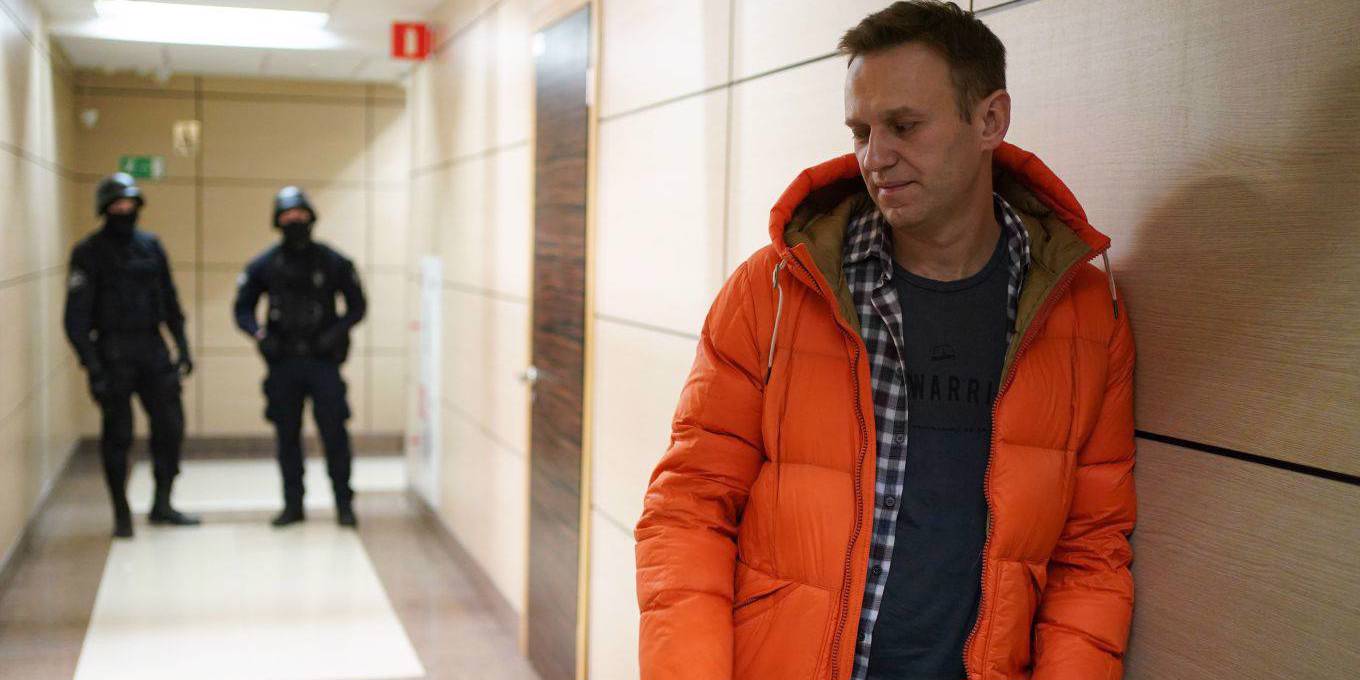
Navalny’s Return
EKATERINA KOTRIKADZE
Monday 18th of January 2021
Despite independent journalists uncovering more details about last year's nerve-gas attack against Russian opposition leader Alexei Navalny, public sentiment in the country remains unmoved. The primary reason is not that Russian citizens don't know about the crime; it is that too many just don't care.
Alexei Navalny is about to disturb Russia’s laziest month. As in Soviet times, the New Year holiday stretches halfway through January, allowing for Russians to drink, eat oranges, and watch nostalgic 1970s romantic comedies. Politics usually gets put on hold – but perhaps not this year, with Navalny’s planned return from Berlin on January 17, following his poisoning last August.
The end of 2020 already signaled that this January would be different, because we Russians learned that Navalny, the country’s main opposition leader, was the target of a murder plot that was almost certainly carried out at the Kremlin’s behest. Instead of protecting us, the FSB, the Russian intelligence service and successor to the KGB, has been busy trying to eliminate the regime’s opponents.
An investigation conducted by journalists from Bellingcat, The Insider, and CNN has provided a clear picture of the Kremlin’s operation to poison Navalny with the nerve agent Novichok during his August trip to the Siberian city of Tomsk. It is Navalny’s luck that the FSB’s former mastery of the dark arts has atrophied over time. The operation failed, and Navalny is now openly – and sometimes almost comedically – exposing his assailants, one of whom, believing that he was speaking to someone in the “system,” revealed operational details of the plot over the phone. It was Navalny, who recorded the call.
What more should be needed to provoke public indignation? Surveying my own colleagues at the independent TV station Dozhd, most agreed that Navalny should be 2020’s person of the year. His fearless quest to hold the powerful accountable has earned the respect of thousands, if not millions.
But in another recent survey, just 61% of Russians report having “heard something” about Navalny’s poisoning, and only 17% said they had been following the story closely. Worse, 30% responded that there was no poisoning – believing that it was all an act – and another 19% agreed that it was “a provocation of Western intelligence agencies.” A mere 15% recognized it “as an attempt by the authorities to eliminate a political opponent.”1
These findings demonstrate two things. First, a large share of Russians still watch and believe state television, and are not seeking alternative opinions and news sources, such as on YouTube, where more discerning Russian news consumers now turn. Second, and more disturbing, many Russians simply don’t care. Around 44% heard about this heinous crime, but either are not bothered enough by it to learn more, or are in a state of fearful denial about their own political leaders’ actions.
The end of 2020 already signaled that this January would be different, because we Russians learned that Navalny, the country’s main opposition leader, was the target of a murder plot that was almost certainly carried out at the Kremlin’s behest. Instead of protecting us, the FSB, the Russian intelligence service and successor to the KGB, has been busy trying to eliminate the regime’s opponents.
An investigation conducted by journalists from Bellingcat, The Insider, and CNN has provided a clear picture of the Kremlin’s operation to poison Navalny with the nerve agent Novichok during his August trip to the Siberian city of Tomsk. It is Navalny’s luck that the FSB’s former mastery of the dark arts has atrophied over time. The operation failed, and Navalny is now openly – and sometimes almost comedically – exposing his assailants, one of whom, believing that he was speaking to someone in the “system,” revealed operational details of the plot over the phone. It was Navalny, who recorded the call.
What more should be needed to provoke public indignation? Surveying my own colleagues at the independent TV station Dozhd, most agreed that Navalny should be 2020’s person of the year. His fearless quest to hold the powerful accountable has earned the respect of thousands, if not millions.
But in another recent survey, just 61% of Russians report having “heard something” about Navalny’s poisoning, and only 17% said they had been following the story closely. Worse, 30% responded that there was no poisoning – believing that it was all an act – and another 19% agreed that it was “a provocation of Western intelligence agencies.” A mere 15% recognized it “as an attempt by the authorities to eliminate a political opponent.”1
These findings demonstrate two things. First, a large share of Russians still watch and believe state television, and are not seeking alternative opinions and news sources, such as on YouTube, where more discerning Russian news consumers now turn. Second, and more disturbing, many Russians simply don’t care. Around 44% heard about this heinous crime, but either are not bothered enough by it to learn more, or are in a state of fearful denial about their own political leaders’ actions.
Is a “color revolution” even possible in Russia, given that even a government operation to murder an opposition leader is not enough to provoke national indignation? Likewise, few Russians batted an eye last summer when Putin rewrote the constitution to extend his rule at least until 2036.
Russia’s past – both Soviet and czarist – has taught today’s Russians that separation from the leader generally comes only with his death. Under Putin, many Russians – especially older generations – have come to embody a combination of imperial longing and fear of the external (and eternal) enemy. Life under this leader may not be ideal; but, as Navalny and his supporters have learned, it isn’t bad enough.
project-syndicate.org